
By Janet Heard
The South African Human Rights Commission (SAHRC) has released a policy brief on safeguarding information integrity as a precondition for rights, including a recommendation to strengthen support for pluralistic and independent media.
By doing so, the SAHRC policy brief on Information Integrity and Human Rights mirrors calls in the Johannesburg Declaration, which was adopted during the inaugural M20 (Media) Summit in South Africa in September last year.
A rights-centred framework is a cornerstone of the M20 Declaration, which references human rights eight times. It notes that information integrity is both in crisis and essential to sustaining democracy. “Our call is an injunction to everyone to do more to protect press freedom, and support the role of journalism, and a human rights-based media ecosystem in its contribution to the public good.”
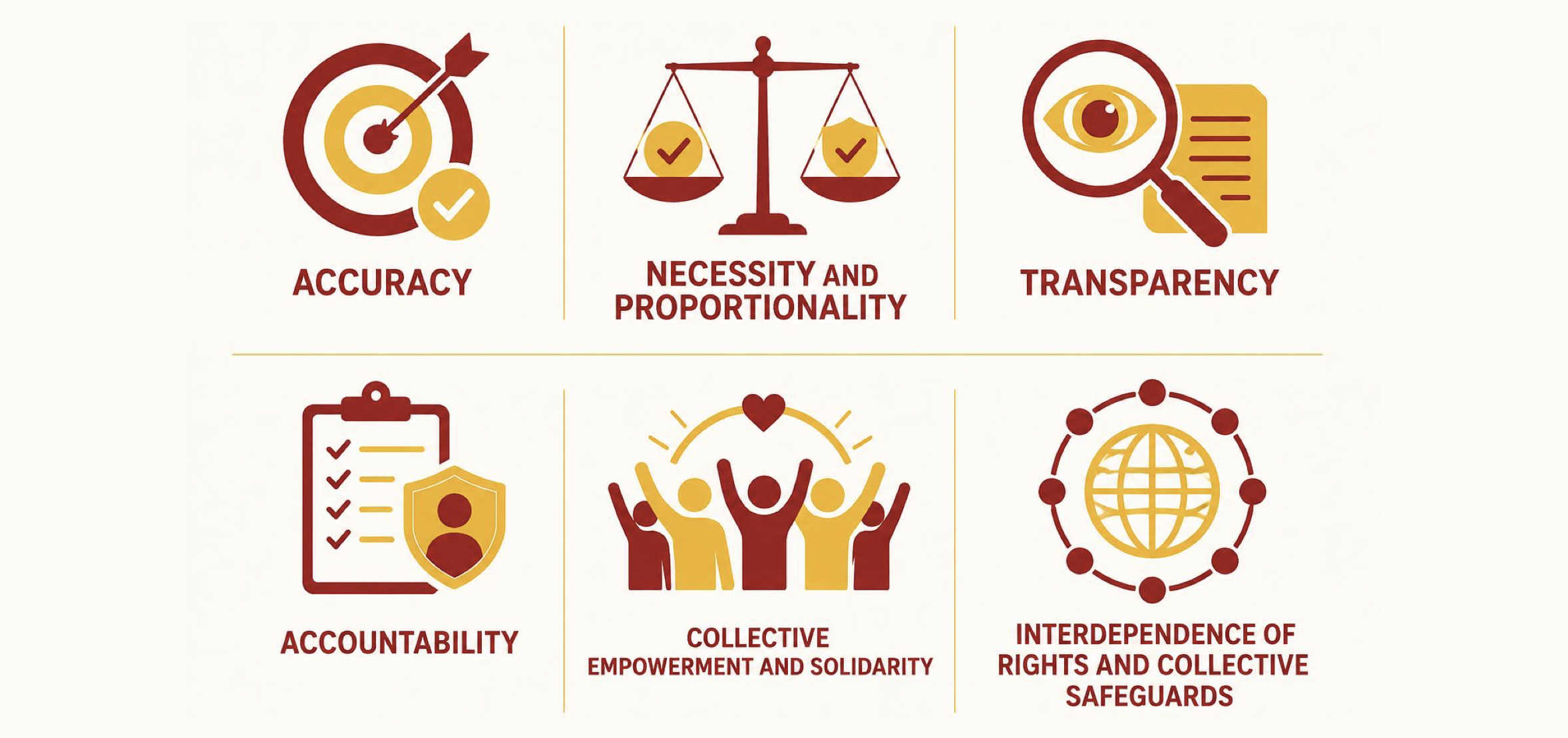
In turn, the SAHRC brief focuses on disinformation, platform accountability, and democratic resilience in South Africa. “In contexts where access to reliable, independent information is limited, disinformation is more likely to take root and spread, particularly among marginalised and linguistically underserved communities.’
Both documents emphasise that financial sustainability is fundamental to safeguarding independent journalism.
The SAHRC brief argues that public policy must actively support pluralistic media through targeted measures, such as fiscal incentives, donor-supported models (evidenced by initiatives like South Africa’s GroundUp and Nigeria’s Premium Times Centre), and digital platform levies, it notes.
“The Commission further considers that platform-based funding mechanisms, including levies on digital advertising revenue, may provide a viable means of supporting public-interest content, provided that such mechanisms are designed in a manner consistent with editorial independence and freedom of expression.
This aligns with the M20 Declaration’s call – echoing commitments in the Global Digital Compact— for G20 leaders to establish public funding models for journalism akin to other public goods.
Crucially, both frameworks stress that such financial mechanisms must be designed with strict safeguards to preserve editorial independence and guarantee universal access to reliable information.
The SAHRC brief serves both as a warning and a framework for action: “The choices made in this moment will shape whether the information environment serves as a space for democratic engagement and human flourishing, or as a vector for division, exclusion and harm.”
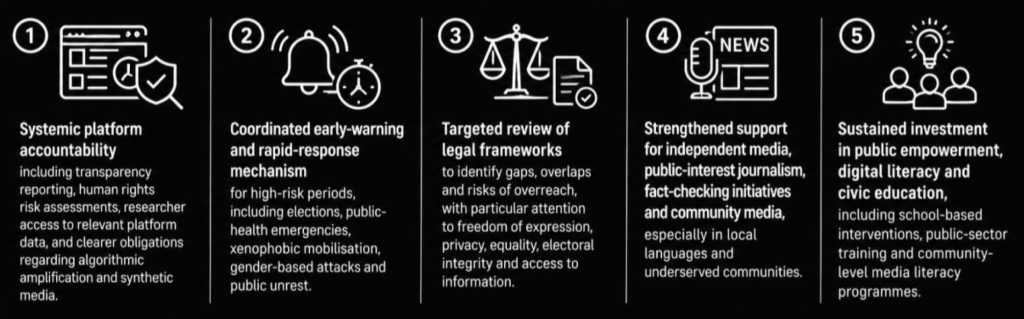
The SAHRC concludes with five “policy pathway” recommendations for South Africa:
- The development of platform accountability measures, including transparency reporting and clearer obligations regarding algorithmic amplification and synthetic media.
- The establishment of a well-funded, coordinated early-warning and rapid-response mechanism for high-risk periods, including elections.
- A targeted review of existing legal frameworks to identify gaps, overlaps and risks of overreach.
- Strengthened support for public-interest journalism, fact-checking initiatives and community media, especially in local languages and under-served communities.
- Sustained investment in public empowerment, digital literacy and civic education, including school-based interventions, public-sector training and community-level media literacy programmes.
Growing awareness
On a micro level, the SAHRC policy brief underscores a growing awareness that information integrity and independent media are indispensable to safeguarding democracy.
At a global level, the M20 noted its disappointment at the close of the G20 Leaders Summit late last year that information integrity and media issues were not included in the closing Leaders’ Declaration, especially given the earlier work done on information integrity and the digital economy during Brazil’s Presidency in 2024.
But it noted the 11th-hour audience that 2025 G20 host president Cyril Ramaphosa held with the M20 delegation, during which he expressed a strong understanding of the public-interest role of journalism, the need to protect information as a public good, and the urgency of strengthening information resilience in the digital age. The M20 also noted that the G20 global leaders’ declaration included pointers on AI governance, data governance, and emerging technologies, and also various paragraphs which could support future advocacy around media sustainability, digital rights, platform accountability, and the importance of trusted information in governance systems.
The SAHRC recommendations and the M20 Johannesburg Declaration demonstrate that momentum is building – and that safeguarding information integrity is both a local necessity and a global imperative.
Read the full SAHRC policy brief here.