

By Barbra Okafor
When Papaoutai came through my feed during AFCON, I stopped scrolling. The swell of voices, the Afro Soul style, and the emotion behind it felt like a real discovery. Whoever made this, I thought, is about to have a moment.
Then I looked it up.
The track was AI-generated, released by a Swedish label, and received 14 million Spotify streams in its first month. The French performing rights society SACEM confirmed legality and royalties for the original songwriters, Stromae. All requirements were met.
But making music is never just one person’s work. The session musicians, producers, sound engineers, and communities whose traditions shaped every choice are not mentioned in any rights statement. The legal settlement protected only the person with the most resources and went no further.
The model that created this track learned its style from somewhere: from recordings, production patterns, and the creative work of artists and communities across the continent. This learning is not tracked, not compensated, and does not need a license.
The Johannesburg Declaration that emerged from the 2025 M20 summit describes this situation clearly: media and creative revenue models are collapsing because of unchecked, large-scale data extraction, with no accountability to the communities whose knowledge and creativity are used.
This discussion paper focuses on practical steps that can be taken now, before any laws are passed across Africa, if they come at all.
The Information Integrity crisis
African newsrooms attract huge audiences on global platforms but get little of the value those audiences create. More than half of internet users in Nigeria and Kenya use YouTube for news each week, which is among the highest rates in the world. Yet, the advertising revenue flowing back to African publishers does not match that reach. Revenue-sharing programmes are set up for markets with more advertiser demand. Having reach without revenue slowly erases these newsrooms.
AI makes the problem worse. African journalism, investigative reports, election coverage, conflict documentation, exists in a structural vacuum: no licensing framework exists, no compensation mechanism has been established, and no notification system is required.
The content is publicly accessible; the tools to extract it at scale are widely used; and the absence of any licensing infrastructure means there is no pathway for newsrooms to be paid, even if platforms wanted to pay them. This extraction without return accelerates an already precarious situation: as newsrooms shrink, local reporting is the first to go.
The knowledge base that AI systems use becomes weaker and less reliable, and then this degraded information is fed back to African audiences as truth.
As Eke, Wakunuma, and Akintoye explain in Responsible AI in Africa, this is a form of epistemic injustice. Global AI systems are built on African knowledge but are not accountable to the communities that created it. When African reporting is taken without editorial context, the AI learns only the text, without what made it trustworthy. This leads to African realities being misrepresented on a large scale, with no African editor approving any of it.
The quality, ownership, and representativeness of African data sit at the centre of this crisis. It demands a structural response.
A licensing economy is forming, African media is not in it
Between 2023 and 2025, major publishers made deals worth hundreds of millions of dollars with OpenAI, Microsoft, and Google. These included News Corp, Reuters, the Financial Times, and the Associated Press. A market for AI content licensing now exists.
All the deals that have been made public involve only large, well-established publishers which have the power and legal support to be viable partners. African newsrooms lack the collective size or a coordinating body, so they cannot meet the requirements needed to make these deals work.
The music industry addressed this problem by creating Collective Management Organisations like SAMRO (Southern African Music Rights Organisation), since individual artists cannot negotiate directly with platforms. This model works, but it was designed for a streaming era. Now, regulatory shifts, such as the EU AI Act’s transparency rules and the US Copyright Office’s 2025 statement that AI training involves copyright, are giving platforms more legal incentive to license content rather than scrape it. This opportunity will not last indefinitely.
Now is the time for African media to organise.
The proposal: A Pan-African media data consortium
AI data extraction is a global problem, but a Pan-African consortium is needed because global licensing systems have usually favoured Western publishers and left out markets in the Global South. Africa cannot wait to be included in someone else’s system. It needs to build its own.
In 1982, Bloomberg solved a problem that now seems simple: financial data was everywhere but scattered and hard to get. Bloomberg created a central, subscription-based platform that brought all the data together in one place and charged institutions to use it. The key was the system itself. Whoever controls the organised, verified, and accessible version of valuable information sets the rules for how others use it.
African journalism is exactly that kind of asset — locally sourced, linguistically diverse, contextually specific and increasingly scarce in an information environment flooded with synthetic content. It is precisely what AI developers need to build systems that do not misrepresent African realities.
A Pan-African Media Data Consortium would be a shared, licensed trust where newsrooms and creators can license their archives to AI developers at rates they negotiate together. On their own, no newsroom has enough data, legal support, bargaining power, or unity to get fair compensation. A consortium solves all these problems at once.
Importantly, traditional newsrooms no longer control public information. Independent digital creators are now the main news source for African youth. For a consortium to succeed, it must connect legacy media with the creator economy to reach the scale that attracts platforms. The Copyright Clearance Centre’s collective AI licensing framework, launched in 2024, shows that this approach works. The next step is to apply it to African journalism.
This model carries indigenous intellectual legitimacy. The principle that individual capacity is realised through collective organisation sits at the heart of Ubuntu philosophy, which Eke, Wakunuma and Akintoye identify as central to responsible AI development in Africa. A consortium governed and distributed equitably is how Ubuntu is applied to the data economy.
From Declaration to action
The Declaration goes further than copyright and compensation. In its AI in Africa section, it calls on G20 actors to recognise that AI developers and deployers must commit to supporting systems that serve African languages and contexts, rather than marginalising them.
African languages are systematically underrepresented in global AI training data, not because the content does not exist, but because no coordinated infrastructure exists to make it accessible on African terms.
Startups like Lesan AI, building Ethiopian language translation tools that outperform Google Translate, and Spitch AI in Nigeria, which pivoted to African voice AI after finding global models were not built for African voices, are proof of both the demand and the capability. But fragmented startup innovation cannot substitute for collective infrastructure. A Pan-African Media Data Consortium addresses this gap directly — aggregating linguistically and culturally diverse journalistic content within a governed structure that AI developers must engage with rather than extract from.
The M20 Johannesburg Declaration already contains the structure this proposal needs. Its call for united action on copyright and fair compensation for journalistic content used by AI companies finds its mechanism in the consortium. Its identification of unchecked data extraction as the driver of journalism’s market failure finds its structural remedy there too. Its warning that AI-amplified disinformation creates a downward spiral in information quality is directly answered by a consortium licensing contextually verified, editorially governed content into AI systems.
Three steps are proposed as the basis for M20’s ongoing conversation:
- Commissioning a scoping study into consortium feasibility, examining existing collective licensing infrastructure and identifying legal and institutional gaps across the continent;
- Convening African media organisations and independent creator networks through M20 events in 2026 to begin building the necessary coalition; and
- Urging G20 Digital Ministers to recognise collective licensing for AI training data as a necessary policy instrument in Global South media markets.
The information ecosystem that AI is creating will reflect the interests of those who organise first. For African journalism, that time is now. Arriving any later will not only just cost lost revenue, but also lead to knowledge systems that misrepresent the whole continent for a generation.
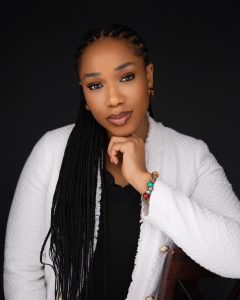
Barbra Okafor is the Founder of The Agency Lab, working with African creatives and organisations on data ownership, IP protection, and fair compensation in the AI economy. Previously Content Programming Lead at TikTok Sub-Saharan Africa and a senior producer at BBC Media Action, her work sits at the intersection of African media, technology, and governance. Her policy work responds directly to the M20 Johannesburg Declaration, and this paper translates those commitments into a practical mechanism for African media ecosystems.