M20 Responds to the G20 South Africa Leaders’ Declaration
Download a PDF of this Press Release here.
The M20 initiative, an independent joint programme of the South African National Editors’ Forum (SANEF) and Media Monitoring Africa (MMA, now Moxii Africa) applauds the historic achievements of the G20 Summit but is also disappointed at the critical omission in the Leaders’ Declaration of the threats to information integrity and, ultimately, democratic resilience.
This year marked a historic milestone with the G20 hosted in Africa for the first time, delivered under exceptionally challenging geopolitical conditions, including a boycott by the United States. Despite these pressures, South Africa successfully hosted the Summit and secured consensus for the Leaders’ Declaration, an outcome many believed impossible.
The M20, an independent global collective of media and related organisations that hosted its inaugural summit in Johannesburg in September, recognises this milestone achievement. It also welcomes the recognition and support the M20 received on key public interest media issues in the build-up to the Leaders’ Summit.
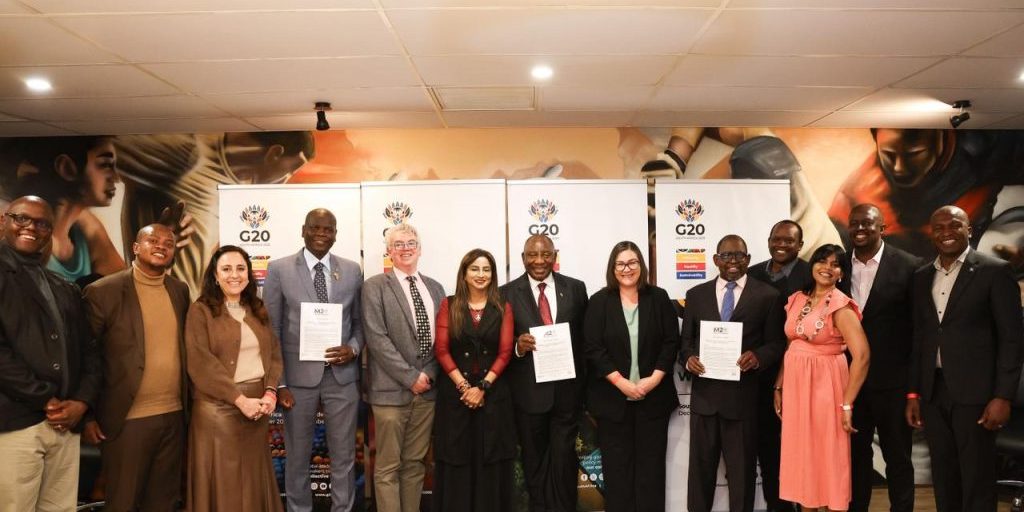
“We appreciate President Cyril Ramaphosa taking the time to meet with us before the Summit and giving us an opportunity to do a formal handover of the M20 Johannesburg Declaration to him. However, this must not be the end of the conversation but rather the beginning of a collaborative effort to highlight information integrity and media issues,” says Makhudu Sefara, Chairperson of SANEF.
However, the success of the G20 Leaders’ Summit cannot obscure a profound governance gap: without information integrity in the digital ecosystem, democracy cannot be protected.
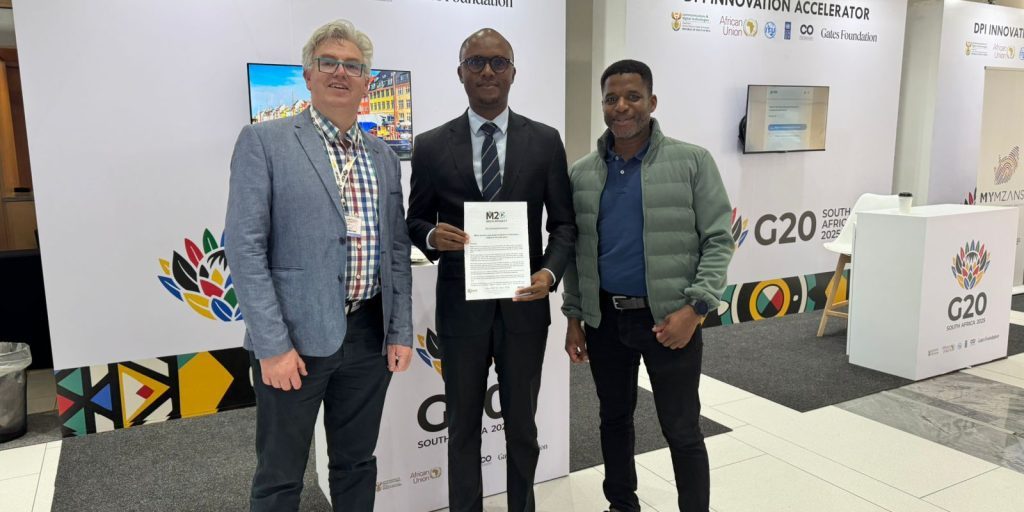
The M20 has engaged extensively around these issues, which are highlighted in the historic M20 Johannesburg Declaration in September, endorsed by more than 70 organisations to date. It was then formally handed over to Communications and Digital Technologies Minister Solly Malatsi in October. Just days before the Leaders’ Summit, an M20 delegation had an opportunity to present the M20 Declaration with key recommendations for the G20 to President Ramaphosa, making the omission of information integrity, media sustainability, journalist safety, online attacks on women, the role of public-interest journalism or children’s rights in the digital environment in safeguarding democracy from the final Leaders’ Declaration disappointing.
Information integrity and media sustainability are the new frontiers in the battle of digital rights and safety. A healthy information and media ecosystem signals a healthy and thriving democracy.
If the information ecosystem collapses, every major G20 commitment becomes harder to achieve, whether on climate action, inclusive growth, AI governance, or digital cooperation. Failing to recognise the relationship between information integrity and democratic health weakens the credibility of the multilateral system at the very moment democracies are under unprecedented strain.
Not including information integrity and media issues in the Leaders’ Declaration is an omission with far-reaching global consequences, especially given the work done on information integrity and the digital economy during Brazil’s Presidency in 2024.
However, the M20 notes that the G20 made progress in several important areas, such as AI governance, data governance, and emerging technologies (paragraphs 44–47 in the G20 Leaders’ Declaration), digital innovation for sustainable development, and access to computing power, datasets, and capacity building for Africa. These are encouraging commitments which we hope to see prioritised during the 2026 Summit.
The M20 further notes useful entry points for further engagement in paragraphs 101, 108–109, 114, and 120 of the Declaration, all of which could support future advocacy around media sustainability, digital rights, platform accountability, and the fundamental importance of trusted information in governance systems.
Importantly, the M20 recognises President Ramaphosa’s 11th-hour audience with the M20 delegation, during which he expressed a strong understanding of the public-interest role of journalism, the need to protect information as a public good, and the urgency of strengthening information resilience in the digital age.
President Ramaphosa also acknowledged the role of the M20, in particular engagement about media freedom, during the G20 Social Summit ahead of the closing summit. The M20 Johannesburg Declaration has also been published on the official G20 South Africa’s website.
“The next G20 Presidency (2026) will be led by an administration in the United States that is likely to be antagonistic toward global commitments on information integrity, media sustainability, platform accountability, and democratic safeguards. Despite this, our momentum must not be lost. This makes South Africa’s leadership the protection of media freedom and the continuity of M20’s work even more important.” says Thandi Smith, Head of Programmes at MMA.
Looking ahead, the M20 remains committed to focus on the role of media and journalism to foster information integrity as a cornerstone for human rights, effective governance, international cooperation and public trust needed for social and economic development in G20 countries and around the world.
The M20 programme will be steered by an advisory group of representatives of international organisations which supported the South African M20 this year. The group will guide and support annual local M20 programmes in G20 host countries, such as in the US next year and in the UK in 2027, to provide a permanent vehicle for independent, parallel media engagement within the G20 landscape.
For more information contact:
Reggy Moalusi (SANEF): [email protected] or +27 71 682 3695
William Bird (MMA): [email protected] or +27 82 887 1370
About M20
The M20 is an independent initiative to ensure issues relating to media integrity and healthy information ecosystems are reflected in the G20 policy agenda.
The M20 mirrors official G20 engagement groups for business, think-tanks, civil society among others, and includes participation in G20 events, convenings of media and information ecosystem role players, hosting of webinars on G20-related issues and publishing policy briefs. It draws on the participation of researchers, experts and networks of international media development organisations and relevant think tanks, civil society, and media organisations among G20 members, as well as from across the African continent.
More info: the G20 South Africa Leaders’ Declaration